9 Tips to Help Prevent Neck Pain

Neck pain is a common problem that can affect people of all ages. It may be related to prolonged sitting, poor posture, muscle tension, repetitive movements, sports injuries or spending long periods using computers and mobile devices.
While not all neck pain can be prevented, simple changes to your daily habits may help reduce unnecessary strain on your neck and shoulders.
Here are 9 physiotherapy tips to help prevent neck pain and stiffness.
1. Choose a Supportive Pillow
Your pillow should support your head and neck in a comfortable, neutral position while you sleep.
A pillow that is too high or too low may place unnecessary stress on the muscles and joints of your neck.
The ideal pillow depends on your sleeping position, body shape and individual needs.
If you regularly wake with neck pain or stiffness, your pillow or sleeping position may be contributing to your symptoms.
2. Find a Comfortable Sleeping Position
Sleeping on your back or side can help maintain a comfortable spinal position when your pillow provides adequate support.
If you sleep on your side, choose a pillow that fills the space between your head and shoulder without pushing your neck too far up or allowing it to drop down.
Try to avoid sleeping on your stomach if it requires your neck to remain rotated for long periods.
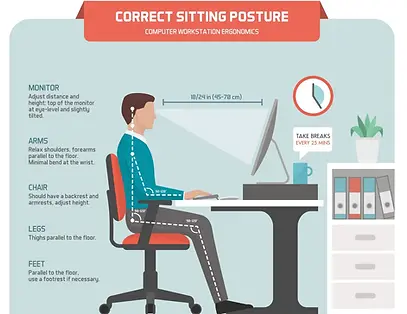
3. Position Your Computer Monitor Correctly
If you spend long hours at a computer, your workstation setup can make a significant difference.
Position your monitor approximately at eye level so you don't constantly look down or crane your neck forward.
Laptop users may benefit from using a laptop stand or separate monitor with an external keyboard and mouse to improve their working posture.
4. Reduce Neck Strain When Using Your Phone
Looking down at your phone for prolonged periods can increase the load on the muscles and joints around your neck.
Instead, try to:
-
Bring your phone closer to eye level
-
Avoid staying in one position for too long
-
Support your arms when possible
-
Take regular movement breaks
Changing position frequently is often more important than trying to maintain one "perfect" posture all day.
5. Avoid Cradling Your Phone Between Your Neck and Shoulder
Holding your phone between your ear and shoulder places your neck in an awkward position and may contribute to muscle tension.
If you frequently make long phone calls, consider using earphones, a headset or speaker mode so your head and neck can remain in a comfortable position.
6. Exercise and Strengthen Your Neck
Regular exercise can help maintain strength and mobility around your neck, shoulders and upper back.
Depending on your individual needs, exercises may include:
-
Chin tucks
-
Neck mobility exercises
-
Shoulder blade strengthening
-
Upper-back mobility exercises
-
Postural strengthening
-
Gentle stretching
If you already have neck pain, a physiotherapist can recommend exercises appropriate for your specific condition.
7. Take Regular Movement Breaks
Sitting in the same position for several hours can contribute to neck and shoulder stiffness.
If you work at a desk, regularly stand up, walk around and gently move your neck and shoulders.
Short, frequent movement breaks throughout the day can help reduce prolonged muscular and postural strain.
8. Carry Bags and Loads Evenly
Regularly carrying a heavy bag on one shoulder may place uneven stress on your neck, shoulders and upper back.
Keep your bag as light as practical and consider using a backpack with two shoulder straps when carrying heavier items.
When lifting or carrying, try to keep the load close to your body and distribute the weight evenly.
9. Improve Your Everyday Posture
Poor or sustained posture can contribute to neck and shoulder discomfort, particularly when sitting or working for long periods.
Rather than trying to sit perfectly upright all day, aim for a comfortable and supported position and change your posture regularly.
Your workstation, chair, monitor and daily movement habits should work together to reduce unnecessary strain.
When Should You See a Physiotherapist for Neck Pain?
If your neck pain continues, keeps returning or interferes with your sleep, work, exercise or daily activities, a physiotherapy assessment may help identify contributing factors.
Physiotherapy for neck pain may include manual therapy, exercise rehabilitation, postural and ergonomic advice, strengthening, mobility exercises and education, depending on your individual condition.
Seek prompt medical attention if neck pain follows significant trauma or is accompanied by symptoms such as progressive weakness, significant numbness, problems with balance or coordination, severe unexplained headache, fever, or other concerning symptoms.
Neck Pain Physiotherapy in Castle Hill & Chatswood
Our physiotherapists provide assessment and treatment for neck pain in Castle Hill and Chatswood, including acute and persistent neck pain, muscle tightness, postural problems, work-related neck pain and sports-related injuries.
We focus not only on relieving symptoms but also on identifying factors that may be contributing to your neck pain and developing an individualised treatment and exercise program.
Contact our Castle Hill or Chatswood physiotherapy clinic to book a neck pain assessment.